Is your Surface Finishing strategy limiting your ability to raise prices?
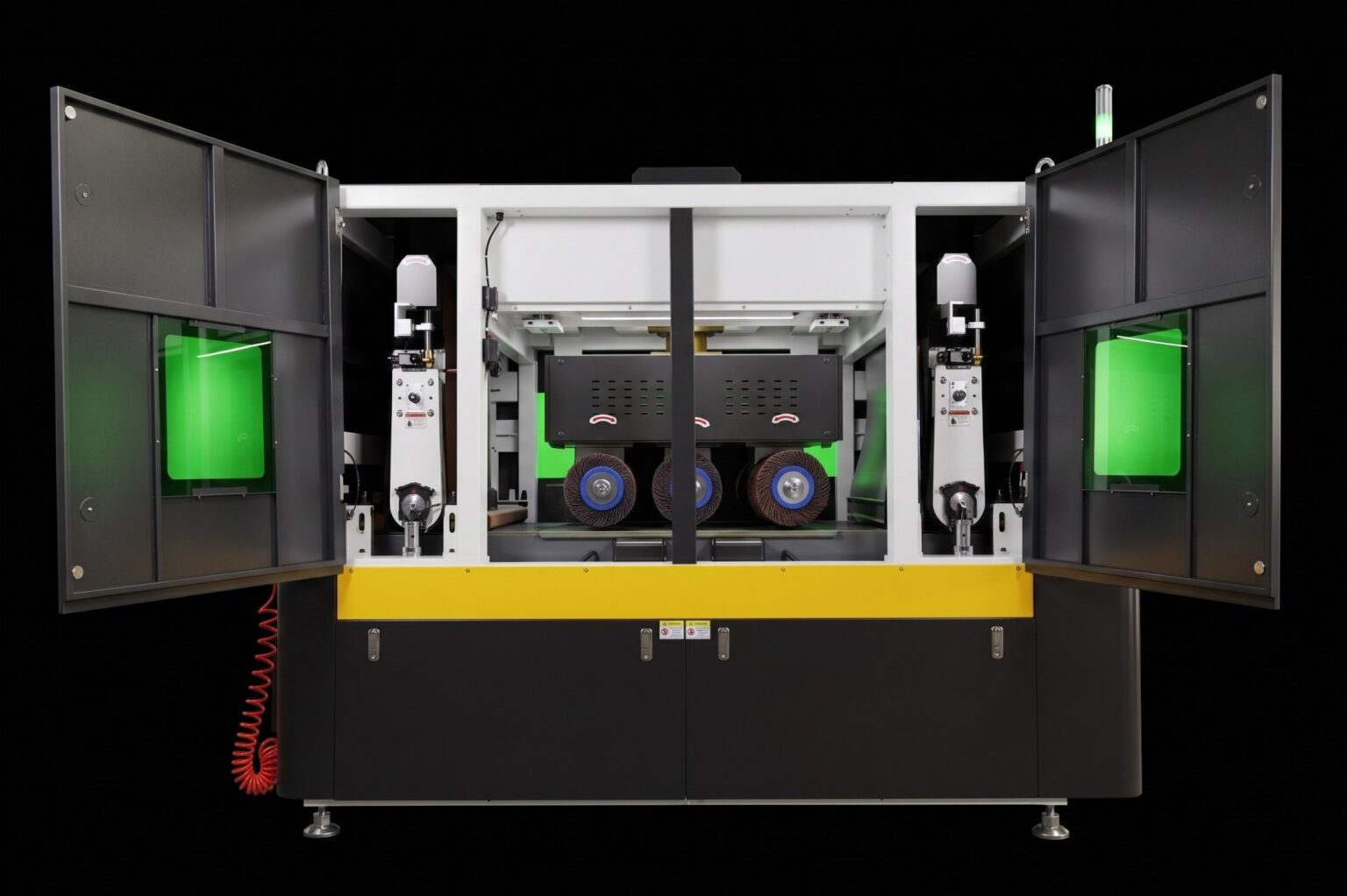
Commencing an detailed examination with respect to programmable machines built specialized in burr elimination possess upgraded assembly procedures, delivering marked gains on pace and superiority. Our overview explores the distinct types of automatic deburring equipment, consisting of scrubbing abrading modules, revolving mechanisms, and advanced programmed applications. We will present the advantages of employing this automation, namely reduced staffing outlays, increased assembly regularity, and greater workshop performance.
Border Chamfering Instruments: Consistent Refining Outlined
Corner filleting units offer a sophisticated solution for securing accurate polishing on objects. Compared to manual approaches, these intelligent platforms deliver steady returns and dramatically improve manufacturing performance. The machines habitually employ different machining appliances like whirling blades, refining wheels, or custom forms to clear sharp tips and spurs. These kinds of technique is key in a wide spectrum of sectors, like automotive and technology.- Elevate face grade
- Curtail creation outlays
- Raise productivity and capability
Slag Discharge Tools: Delivering Flawless, Top-Notch Coatings
Contemporary metalworking processes steadily bring about significant amounts of waste, a byproduct that, if present, can severely affect the grade of the deliverable. Fortunately, advanced byproduct management systems offer a proven solution. These purpose-built machines, employing techniques like blasting, are designed to thoroughly eliminate this unwanted material, ensuring a unblemished and top-tier surface. The resulting gains include reduced rejection rates, upgraded aesthetic appeal, and an overall growth in productivity. By utilizing innovative slag removal technology, manufacturers can consistently deliver exceptional surfaces and adhere to stringent quality specifications.
Sheet Fabrication Finalizing: The Benefits of Deburring Machines
Gaining a top-level finish on sheet metal units is vital for reliability, and deburring devices offer major upsides over hand methods. Eliminating burrs speedily not only improves the surface quality of the component, but also obviates likely complications during construction and functioning. Additionally, automated deburring procedures advance fabrication times and decrease employee expenses.
Refining Sheet Metal Production with Automatic Deburring
For amplify efficiency in sheet metal assembly, utilize automated deburring tools. Traditional deburring is commonly lengthy and susceptible to fluctuations. Replacing automated deburring presents significant gains, containing cut staffing outlays, upgraded finished goods, and boosted processing capacity. This acquisitions are likely to significantly yield returns.Determining the Optimal Deburring Unit for Your Application
Identifying the finest deburring apparatus for your customized needs can be a thorough assessment of several aspects. Primarily, examine the variety of medium you're managing – iron requires varying techniques than polymer. Following that, weigh the measurements and outline of the parts needing surface cleaning. At last, consider your workload level; a bulk operation asks for a custom type of mechanism than a restricted one. Skipping to account for these aspects can lead to suboptimal results and higher expenses.
Edge Unit Method: Progressions and Improvements
Contemporary edge trimming apparatus technique is undergoing rapid development, fueled by the demands for amplified sharpness and effectiveness in processes procedures. Major directions include the merging of digital machines for adjustable burr elimination operations, alongside enhancements in cleaning procedure. We're furthermore perceiving a expansion in mobile edge-removal instruments adapted for targeted uses, and advanced tactics like ultrasonic deburring are earning popularity. The future reveals towards amplified connectivity of burr removal devices within the smart industrial site space.
Upgrading Engineered Unit Quality with Perimeter Shaping
Many forming processes for iron parts introduce sharp edges, which can create stress spots and weaknesses that weaken overall lifespan. Profile rounding, a simple yet significant formula, offers a straightforward solution. It includes slightly trimming the harsh edges of a section during the fabrication stage. This moderates stress areas, raises operational ability, and can avoid rupturing. Benefits are further amplified when dealing with complex shapes or parts subjected to extreme load. Considerations include the preferable radius of the chamfer and its outcome on mating with other modules.
- Reduces Stress Areas
- Elevates Fatigue Capacity
- Blocks Cracking
Impurity Disposal vs. Edge : Grasping the Contrasts
As many engineers use the expressions “slag Edge Finishing processing” and “deburring” synonymously, they denote distinct approaches in metal industrial methods. Edge elimination focuses on discarding the sharp, often tiny, edges created during shaping operations—these are excess scraps of compound left on the part. Dross processing, conversely, addresses an adjunct – typically a synthesis of flux – that appears during processes like forging. Essentially, deburring deals with remaining margins, while slag treatment deals with one remains of a different procedure. To conclude, mechanized deburring and waste removal tools are indispensable components of modern metal assembly that maintain outstanding finished products with limited defects and strengthened efficiency.Finalizing this overview highlights the critical role of advanced automated deburring technologies in shaping manufacturing standards and helping businesses achieve superior productivity and grade.